Choosing an Autel Scanner for Diagnostics, Resets, and Active Tests
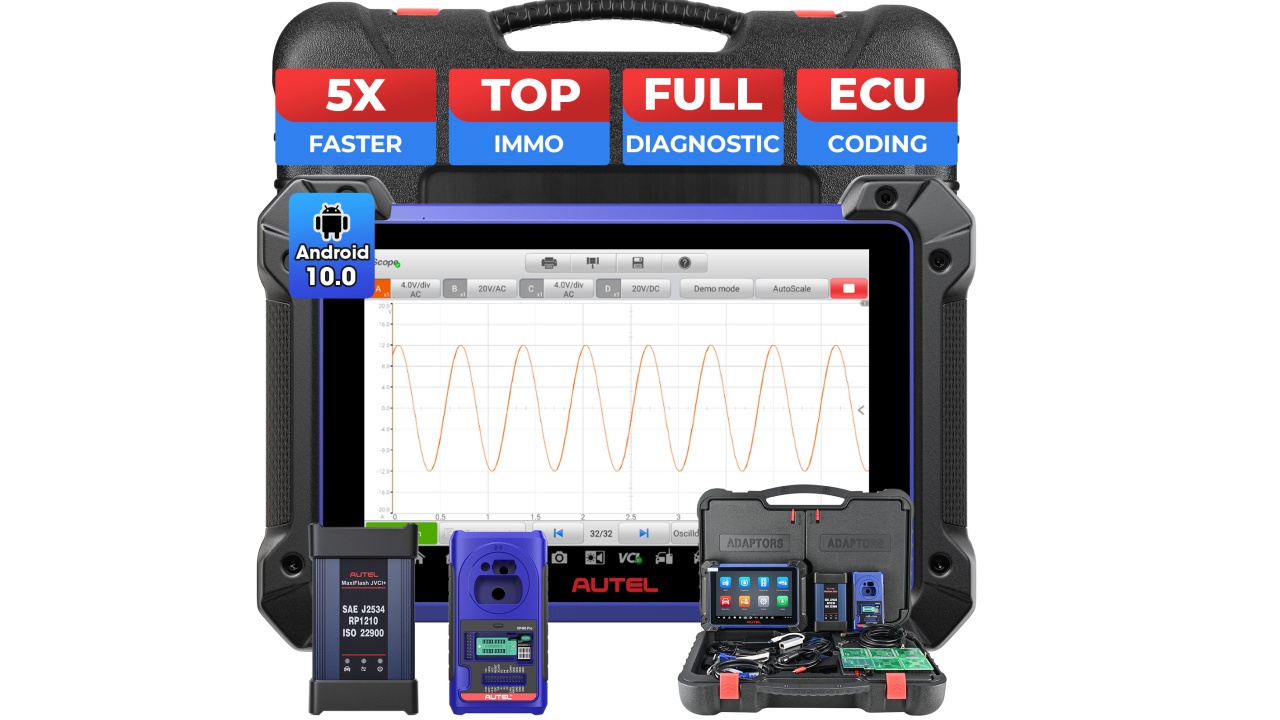
Today, the repairs performed on a car are more than just about reading warning lights. Most of the vehicle’s systems are now electronic and require post-repair inspection, resetting, and testing. In workshops, these are performed in a structured way using an autel scanner, which can also perform diagnostics, system resets, and active testing. For more rugged systems, tools such as the Autel MaxiIM IM608 II provide deeper access to multiple vehicle modules.
Matching the Scanner to Workshop Workload
Not all workshops do the same kind of repair. Some do basic fault reading; others do full system repairs. The selection of a scanner is based on the frequency of diagnostics, resets, and testing. Tools are chosen based on workload rather than just the brand in a busy environment with a supplier like Lenkor.
Diagnostics Across Full Vehicle Systems
One of the most important tasks of an Autel scanner is to read fault codes from various vehicle control units. These include engine, transmission, braking, and body systems. The scanner gathers data from all units at once rather than one unit at a time, thus saving time by reducing tool switching.
Reset Functions After Repairs
Many of the systems in a vehicle must be reset after parts are replaced to function properly. Engine, steering, battery, and brake resets are supported by Autel scanners. If these resets aren’t cleared, the vehicle might still display warning signs after repairs are made. In some cases, incomplete resets can also affect fuel usage, steering response, and stability control behavior, even when the repaired part itself is working correctly.
Active Tests for Real Component Control
Active testing allows technicians to send commands to vehicle components. For instance, a cooling fan or fuel pump could be turned on directly from the scanner, without starting the engine. This can be used to verify a part’s function before replacing it. This also minimizes the number of parts that need to be replaced during the diagnosis. It also helps confirm wiring and signal response issues that may not appear during standard fault code checks.
Engine Performance Checks
Engine issues often involve airflow, fuel delivery, or ignition timing. An Autel scanner reads live engine data, including sensor readings and fuel adjustments. This helps identify irregular behavior during operation rather than relying solely on stored fault codes.
Brake System Testing and Monitoring
Brake systems use sensors and hydraulics that must communicate correctly. A scanner checks if the ABS responds to wheel-speed changes. It can also confirm if brake-related components are reacting as expected during system tests.
Reset Needs After Battery Replacement
Modern vehicles often lose stored settings after battery replacement. Autel scanners include battery reset functions that allow the vehicle to relearn its power management system. Without this step, systems like start-stop or charging control may not function correctly. In some cases, adaptive memory for idle control and energy distribution also needs to be relearned before normal operation returns.
Sensor Calibration After Mechanical Work
Many sensors require recalibration after parts are replaced or adjusted. These include sensors for steering angle and throttle position. The Autel scanners guide this process step-by-step, ensuring accurate readings. This also helps prevent small alignment errors from causing stability or acceleration issues while driving.
ECU Communication and System Sync
Vehicles today use multiple control units that must stay in sync. When communication breaks between these units, faults can appear across different systems. Autel scanners read communication status and help identify where signal loss is occurring between modules. This makes it easier to isolate whether the issue is wiring, software mismatch, or a failing control unit.
Use in Multi-Brand Repair Shops
Workshops that handle different vehicle brands need scanners that support multiple systems and protocols. Autel tools are used on European, Asian, and American vehicles without requiring any equipment changes. Lenkor supports these workshops through distribution and overseas warehousing, helping maintain tool availability for daily operations.
Choosing Based on Reset and Test Depth
Some scanners only read codes, while others support full resets and active testing. The choice depends on how deep the repair process goes. Workshops dealing with complex faults usually require tools with full system access rather than basic code readers.
Conclusion
Selecting an Autel scanner for diagnostics, resets, and active tests depends on the type of repair work being handled. Basic scanning may be enough for simple fault reading, but full workshop environments require deeper control over systems and components. Functions such as resets and active testing help confirm repairs rather than relying on assumptions. In multi-brand repair setups, support from suppliers such as Lenkor, including distribution coverage and service support, helps ensure that these tools remain available for continuous use in the workshop.